Problem set 3b: WeensyOS Fork
This assignment builds on problem set 3a to add fork support.
- Pset 3b is due Sunday 10/18.
Get the code
The p-fork.cc and p-exit.cc programs that exercise pset 3b functionality
are new. Get them with
$ git pull; git pull --no-rebase handout main
or, alternately
$ git pull; git pull --no-rebase https://github.com/cs61/cs61-f26-psets.git main
You should have no conflicts, but if you do the usual advice applies.
Phase 6: Fork
The fork system call
starts a new process by copying an existing process. The process that calls
fork is called the parent process, and the newly created copy is called
the child process. The system call appears to return twice: it returns 0 to
the child, and returns the child’s process ID to the parent.
Run WeensyOS with make run-fork. Alternately, at any time, press the ‘f’
key; this will soft-reboot WeensyOS and ask it to run a single p-fork
process, rather than the gang of allocators. You should see something like
this:
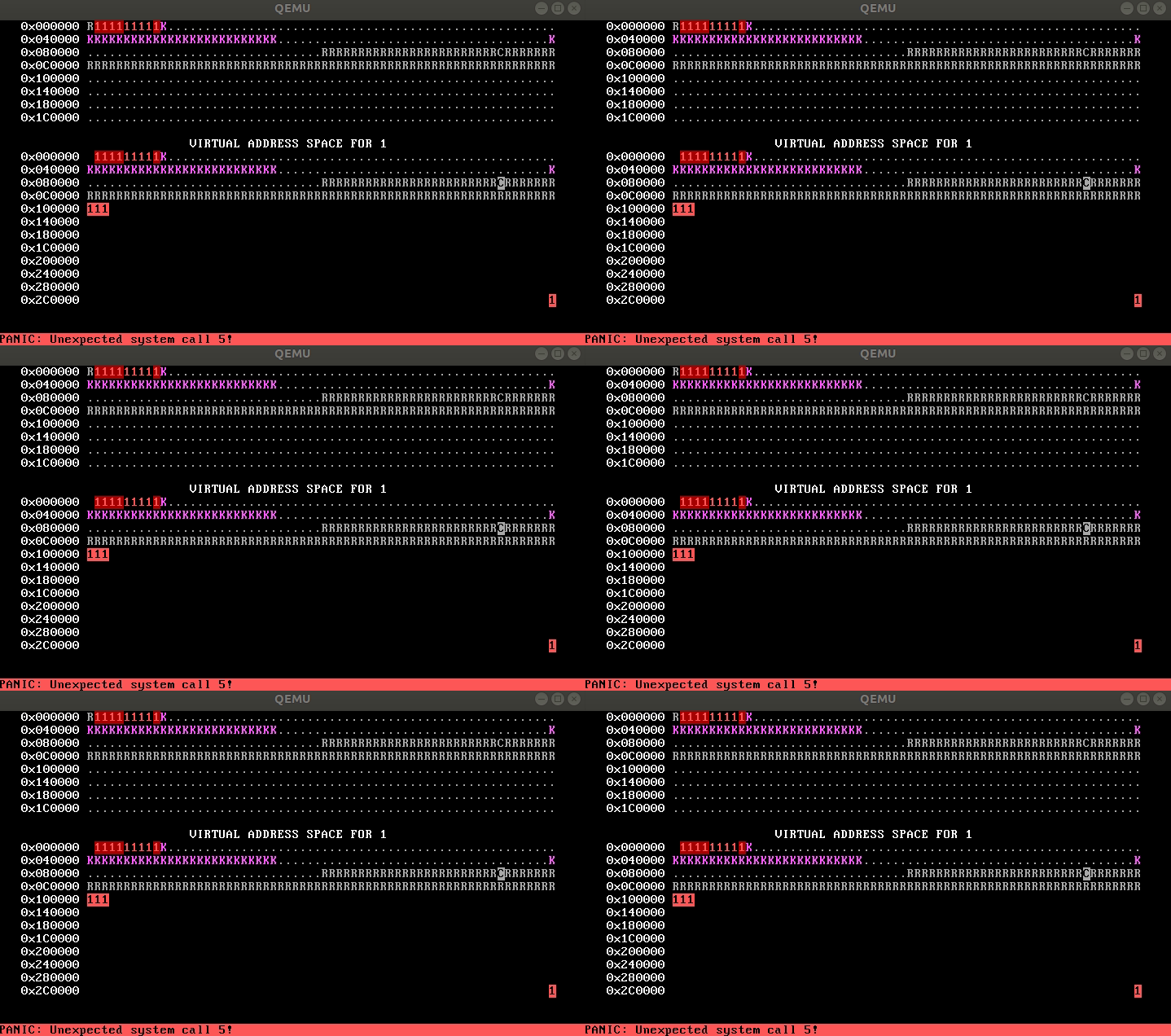
This is because you haven’t implemented fork yet.
Implement fork.
-
Look at other WeensyOS system calls as models for implementing your own system call. Also take a look at the
forkman page to understand what this system call does. -
When a process calls
fork, look for a free process slot in theptable[]array for the child. Don’t use slot 0. Theptable[]array is made up ofprocprocess descriptor objects, which are defined inkernel.hh. -
If a free slot is found, copy the parent’s page table for the child. For addresses below
PROC_START_ADDR(0x100000), the parent and child page tables will have identical mappings (same physical addresses, same permissions). But for addresses at or abovePROC_START_ADDR, the child’s page table must map different pages that contain copies of any user-accessible, writable memory. This ensures process isolation: two processes should not share any writable memory except the console.So
forkmust examine every virtual address in the parent page table. Whenever the parent process has an application-writable, non-console page at virtual addressV, thenforkmust allocate a new physical pageP; copy the data from the parent’s page intoP, usingmemcpy; and finally map pagePat addressVin the child page table, using the permissions from the parent page table. -
The child process’s registers are initialized as a copy of the parent process’s registers, except for
reg_rax, which is initialized to 0. -
The child process should be runnable.
-
If
forkfails in any way—if there is no free process slot, or there’s not enough memory to create a complete copy of the parent process—thenforkmust clean up after itself and return-1. The cleanup procedure must reset the child process slot to the free state. Eventually, after phase 7, it will also free any memory that was allocated during the fork attempt.
When you’re done, you should see something like this after make run-fork (or
pressing ‘f’).
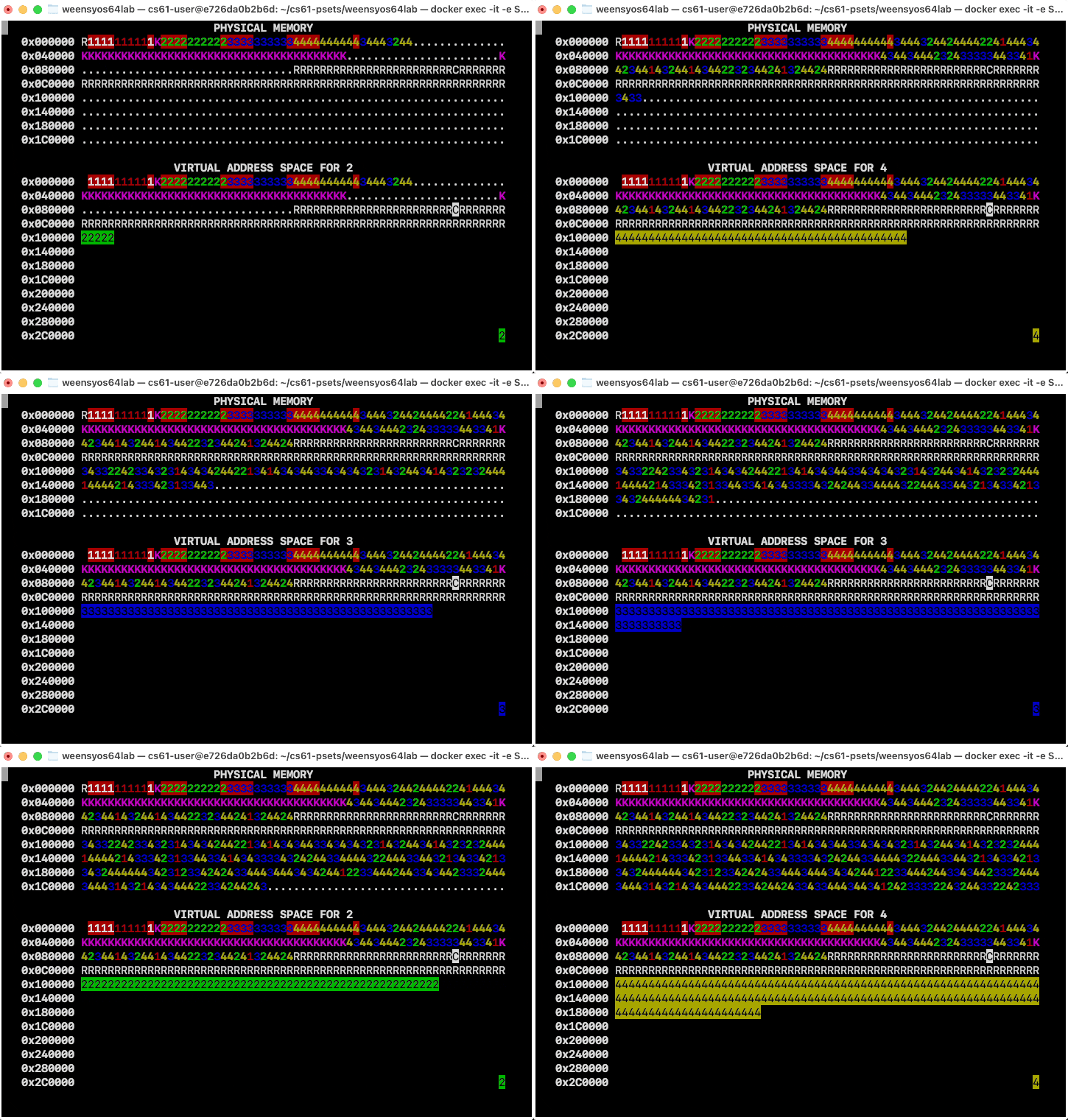
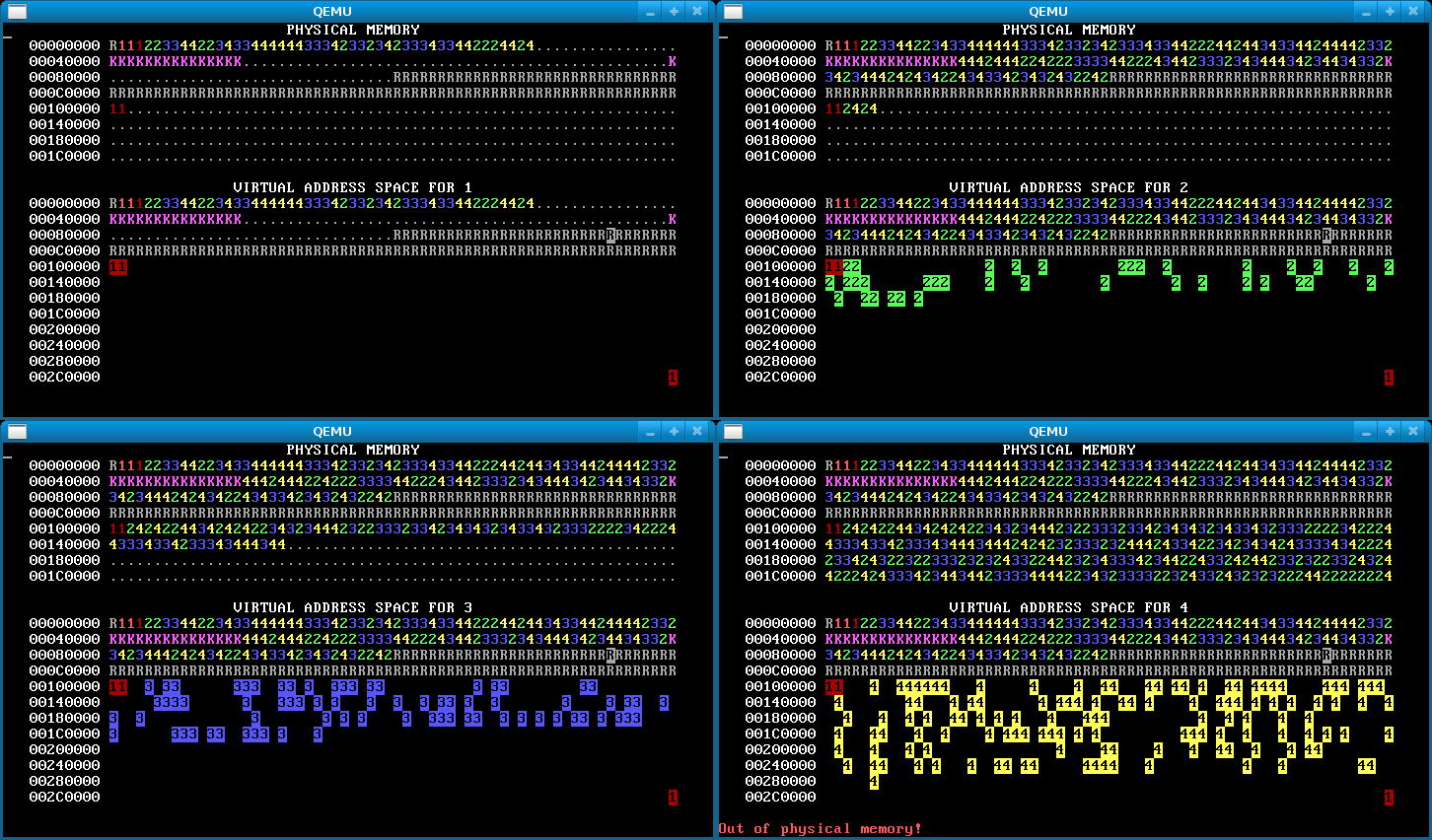
An image like this means you forgot to copy the data for some pages, so the processes are actually sharing stack and/or data pages:
Phase 7: Freeing memory
So far, none of your test programs have ever freed memory or exited. Memory allocation’s pretty easy when there’s no free! So let’s add free by allowing applications to exit.
In this phase, you’ll implement the sys_exit system call, which exits the
current process. This is a capstone since freeing memory will tend to
expose weaknesses and problems in your other code.
To test your work, use make run-exit. Alternately, you can press ‘e’ at
any time, which reboots WeensyOS to run the p-exit program. (Initially
it’ll crash because sys_exit() isn’t implemented yet.) p-exit processes
alternate among forking new children, allocating memory, and exiting. The
result is that once your code is correct, p-exit makes crazy patterns
forever, like this:
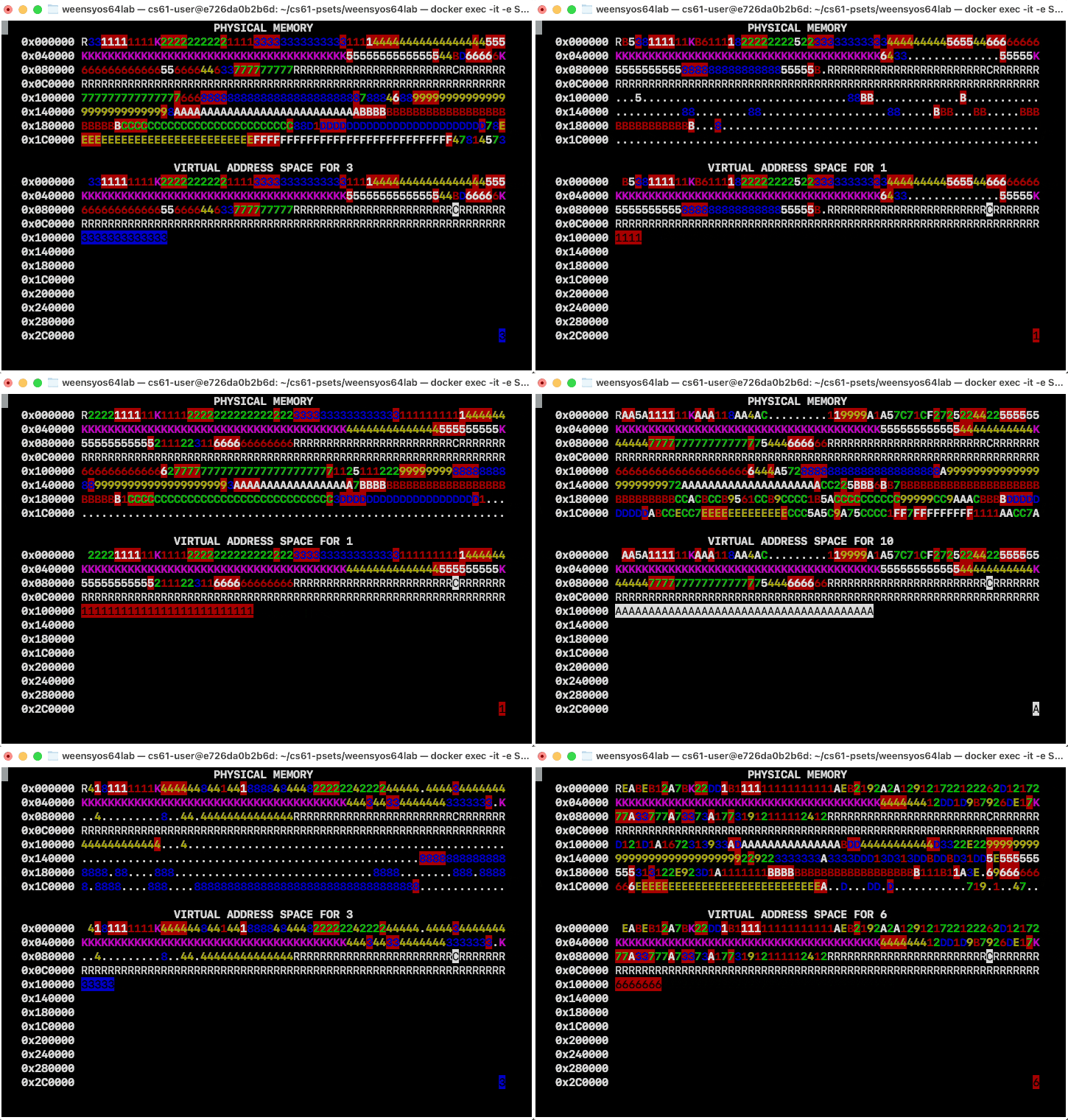
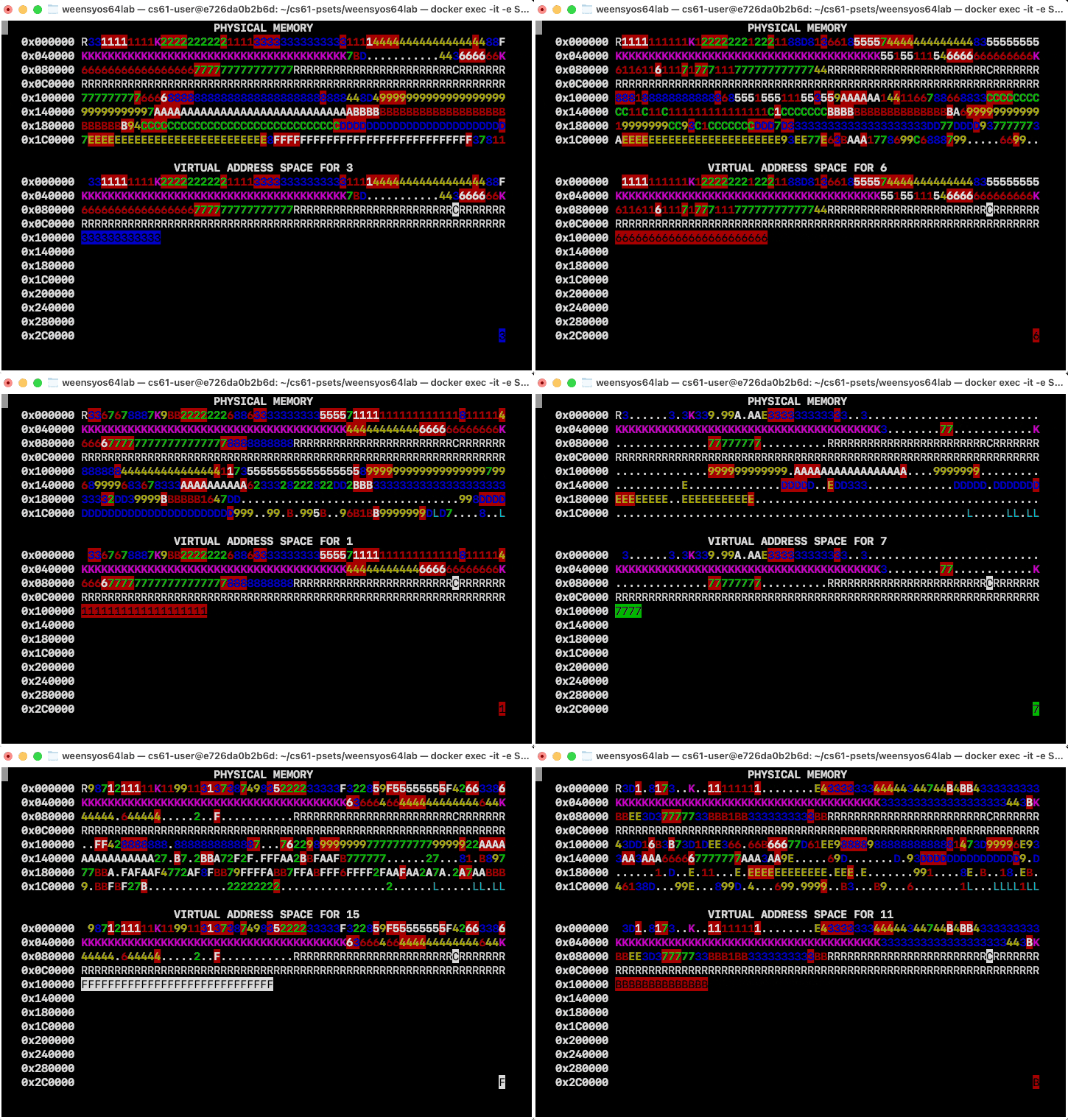
A fully correct OS can run p-exit indefinitely. In an OS with a memory leak,
the physical memory map will collect L pages (L for leak), persistent
blank spots, or both, and if run long enough, these pages will take over the
screen. Here’s an example; note the Ls accumulating at the end of the
physical memory map:
Reducing ALLOC_SLOWDOWN in p-exit may encourage errors to manifest, but
you may need to be patient.
Here’s your task.
-
Complete
kfreeso thatkfreefrees memory. Make sure thatkalloccan re-use freed memory. -
sys_exitshould mark a process as free and free all of its memory. This includes the process’s code, data, heap, and stack pages, as well as the pages used for its page directory and page table pages. The memory should become available again for future allocations.Use
vmiterandptiterto enumerate the relevant pages. But be careful not to free the console. -
You may also need to change
forkand perhaps other places. Inp-exit, unlike in previous parts of the pset,sys_forkandsys_page_allocmight be called when there’s not enough memory to create a new process or allocate or map a page. Your code should handle this cleanly, without leaking memory in any situation.If a
sys_page_allocorsys_forksystem call runs out of memory during its operation:-
The system call must clean up after itself. Any kernel memory or other resources (e.g., process slots) allocated during the system call must be freed.
-
The system call must return
-1to the caller.
Note that out-of-memory events in system calls must not panic the kernel, and they must not cause the calling process to exit. It is not an error when a system call fails! Instead the error return value is passed to the process to handle as it prefers.
-
There should be no memory leaks!
About physical memory iterators (
ptiter)
Phase 8: Shared read-only memory
It’s wasteful for fork() to copy all of a process’s memory. For
example, most processes, including p-fork, never change their code. So
what if we shared the memory containing the code? That’d be fine for
process isolation, as long as neither process could write the code.
Change process_setup to map read-only program segments using read-only
memory. Use the seg.writable() function to detect whether a program segment
can use read-only memory. Then, in fork, share read-only pages between
processes rather than copying them; and, in exit, ensure that shared pages
are correctly accounted for when a process exits.
Use vmiter::writable() to detect whether a page is read-only. Do not use
an equality test like it.perm() == (PTE_P | PTE_U)! vmiter::perm() values
often include bits like PTE_A and PTE_D that are automatically set by
processor hardware, so equality tests on it.perm() will usually fail.
When you’re done, running p-exit should look like this:
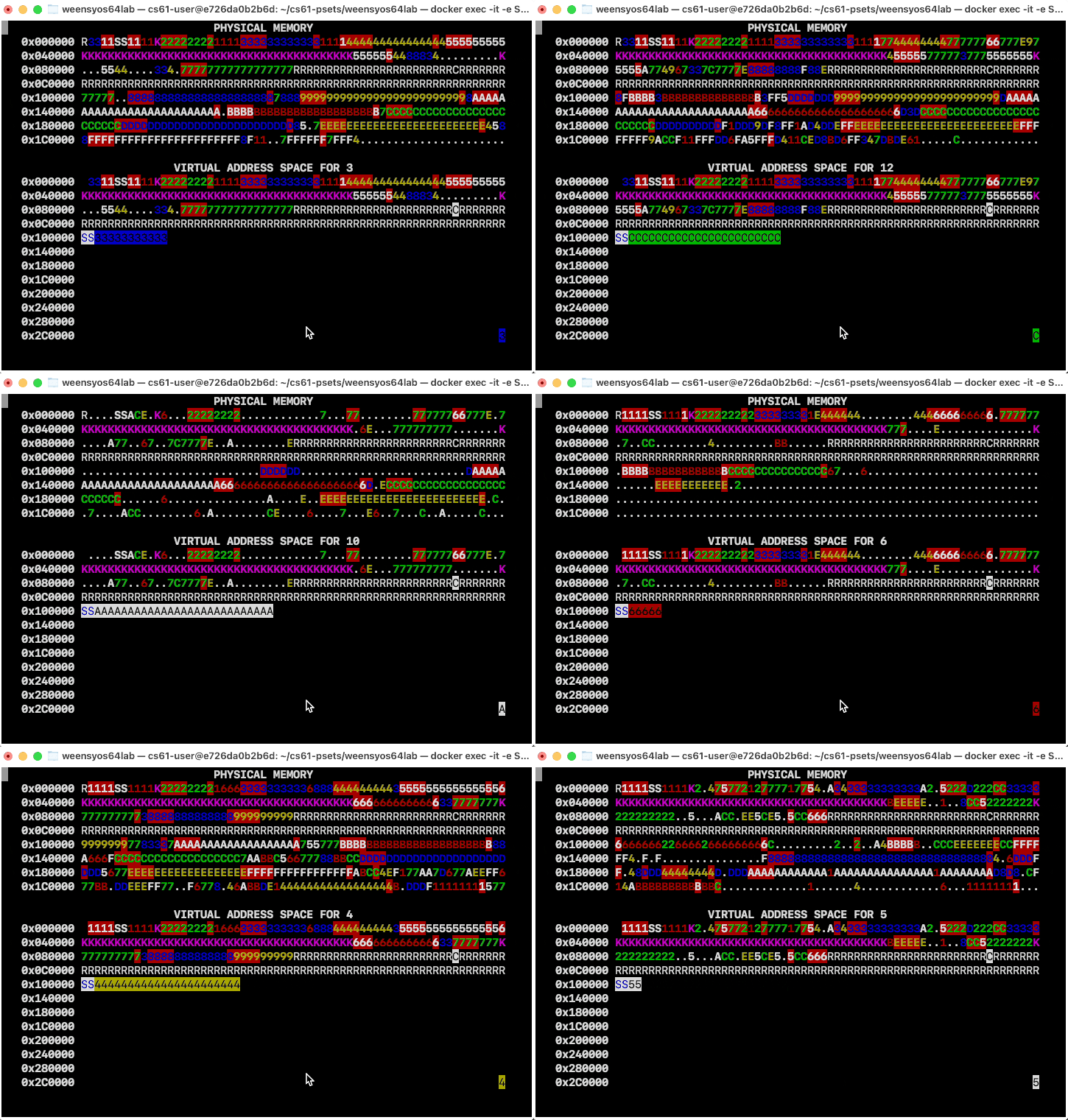
Each process’s virtual address space begins with an “S”,
indicating that the corresponding physical page is Shared by multiple
processes.
Turnin
You will turn in your code by pushing your git repository to github.com/cs61/YOUR-PSET_REPO.git and updating the grading server.